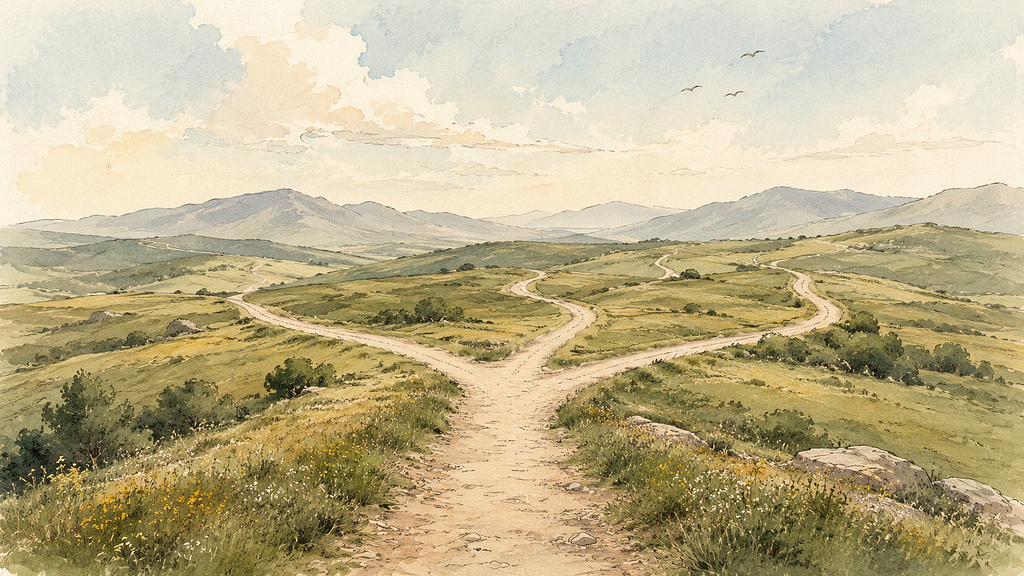
The Difference Between Curiosity and Distraction
Having many interests can make life expansive. It can also make it difficult to recognize what deserves our attention and what is helping us avoid something harder.
I have a difficult time not finishing a book.
Even after I realize I am no longer learning much from it, enjoying it, or particularly interested in what happens next, I feel an obligation to reach the final page. I started it, so I should finish it.
That sounds like discipline. Sometimes it is. Other times, it is simply honoring an obligation no one asked me to make.
I have been thinking about that distinction because I am interested in a lot of things. That is hardly a revelation. It is part of why I started ManyThings Explored in the first place. I enjoy learning about unfamiliar subjects, starting projects, traveling to new places, developing business ideas, writing, wine, technology, history, and whatever else happens to capture my attention.
I believe that range makes my life more interesting. It helps me connect ideas that might otherwise remain separate, and it keeps me from assuming I have everything figured out.
But there is an uncomfortable question hiding inside a life built around many interests:
When am I following my curiosity, and when am I simply becoming distracted?
Not Every Question Needs to Become a Project
Curiosity does not always require commitment.
Sometimes I hear a name, encounter an unfamiliar idea, or read about a place I have never visited. I look it up, follow a few links, and learn enough to satisfy the question. The entire experience might last ten minutes.
That is still worthwhile. Not every interest needs to become a hobby, certification, business, or new part of my identity.
Other interests ask for more.
Wine became one of those for me. Enjoying wine led to wanting to understand it: how climate affects a grape, why the same varietal expresses itself differently across regions, and what someone trained in tasting notices that a casual drinker may miss.
I completed the Court of Master Sommeliers' Level 1 Introductory Sommelier course and examination. I also took a full-day deductive tasting class with Master Sommeliers, learning to examine wine systematically rather than simply deciding whether I liked it. More recently, I took a PreSomm class as a refresher while considering whether to pursue Level 2.
I have not taken that next step.
That does not make the time I invested unfinished or wasted. I went far beyond satisfying a passing question. I developed knowledge and a way of experiencing wine that I will carry with me whether or not I earn another certification.
Curiosity does not announce at the beginning how far it should be followed. We discover that by paying attention along the way.
Some questions deserve a few minutes. Some interests deserve years. Others give us what we came for somewhere in between.
The Appeal of the New
The line between curiosity and distraction becomes harder to see when the original pursuit reaches its least exciting stage.
A new interest arrives with energy. There are possibilities to imagine, things to research, supplies to buy, and plans to make. Progress feels quick because almost everything is new.
Then comes the middle.
The book has to be revised. The business idea needs customers. The certification requires studying what does not come naturally. The trip requires months of physical preparation. The creative project that felt exciting at 5,000 words feels very different at 80,000.
That is usually when another interesting idea appears.
I have written more than 80,000 words of a novel that I have not finished. Along the way, I became focused on another book, Pretire Before You Retire. The new idea grew out of a conversation with a friend and connected with questions I had already been considering about identity, structure, and what life looks like beyond a career. I followed it, and that manuscript moved much faster than I expected.
Did curiosity lead me to Pretire, or did it distract me from the harder work of finishing the novel?
The honest answer may be both.
The novel had reached a stage where finishing required a different kind of effort than beginning. Pretire arrived with urgency and momentum. Choosing to work on it meant choosing not to work on the novel, at least temporarily.
I still plan to return to the novel. I do not consider it abandoned. But 'I plan to return to it' can become a comfortable phrase if it is repeated for too long.
That is what makes distraction difficult to recognize. It rarely looks like doing nothing. For people with many interests, distraction can look remarkably productive.
What Is the New Interest Helping Me Avoid?
I do not think the answer is to become suspicious of every new interest or force myself to complete everything I begin. That would turn curiosity into another rigid system of obligations.
Instead, I am trying to ask a more revealing question:
Is this new interest moving me toward something meaningful, or is it helping me move away from something difficult?
Losing interest is not always a failure of discipline. Sometimes we have learned what we wanted to learn. Sometimes an experience reveals that we liked the idea of the pursuit more than the pursuit itself. Sometimes our priorities genuinely change. Sometimes one curiosity has to wait for another because time is finite.
But sometimes we have simply arrived at the point where novelty ends and commitment begins.
From the outside, those situations can look identical. In both cases, enthusiasm fades. Progress slows. Another possibility becomes more appealing. The difference is what is happening underneath.
If I keep switching interests whenever the work becomes repetitive, uncertain, or uncomfortable, that is probably distraction. If I have stopped receiving value from something and continue only because stopping would make me feel guilty, that may be a failure to trust my own judgment.
Finishing is not always discipline, just as stopping is not always quitting.
Trading One Curiosity for Another
The language of 'finding time' is misleading. Time is not hidden somewhere waiting to be discovered. Pursuing one serious interest almost always requires taking time away from something else.
That means curiosity eventually requires choices.
I can read about dozens of subjects without reorganizing my life. I cannot pursue mastery in all of them at once. I cannot simultaneously give full attention to a novel, another book, sommelier certification, a new business, weekly essays, travel plans, professional responsibilities, and every other idea that interests me.
The limitation is not a shortage of curiosity. It is a shortage of hours.
This does not mean I need to pick one lane for the rest of my life. It means I need to recognize the difference between an interest I appreciate and a commitment I am willing to make. It also means accepting that choosing one meaningful pursuit may require placing another on a shelf without treating that decision as a personal failure.
Interests change because we change. An experience can matter even if it does not last forever. A project can teach us something even if it never becomes a business. A class can deepen our appreciation even if we do not pursue the next certification. A book can have given us its best ideas before we reach its final page.
The goal is not to finish everything we begin. It is to become more honest about why we continue and why we stop.
Something to Consider
What are you continuing simply because you started it, and what new interest might be helping you avoid the harder work of something that still matters?
ManyThings Explored